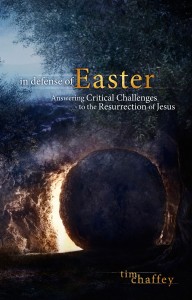
In Defense of Easter: Answering Critical Challenges to the Resurrection of Jesus

My latest book is a practical apologetic on the Resurrection of Jesus. See www.midwestapologetics.org/shop for more details.

My latest book is a practical apologetic on the Resurrection of Jesus. See www.midwestapologetics.org/shop for more details.

Everything hinges on the Resurrection of Jesus. If He rose from the dead, as He predicted (Matthew 20:18–19; John 2:19–22), then He is exactly who He claimed to be and who the Bible proclaims Him to be: the Son of God, the Creator, and the Judge of all humanity. However, if Jesus did not rise from the dead, then He is a false teacher and could not have saved anyone from their sins because He would have needed to die for His own sins.

In 1 Corinthians 15, the Apostle Paul proclaimed that the gospel message he preached, and by which people are saved, is that Christ died for our sins according to the Scriptures, He was buried, and that He rose again according to the Scriptures. He went on to expound on the importance of the Resurrection throughout all 58 verses of this magnificent chapter.

The early church proclaimed the Resurrection at every opportunity. The book of Acts contains numerous sermons delivered by the apostles. Every single one of these messages focuses on the Resurrection of Jesus. Take some time to read through Acts and pay attention to the centrality of the Resurrection in the apostles’ preaching.

In Defense of Easter

I am thrilled to announce the publication of my book In Defense of Easter: Answering Critical Challenges to the Resurrection of Jesus. This unique book is a culmination of many years of research into this all-important subject and addresses many key topics related to the Resurrection. It is an apologetic work in that it highlights the numerous evidences for the Resurrection from the Bible, history, and archaeology. The second section of the book critiques all of the views raised by critics and skeptics over the centuries in their attempts to explain away this tremendous miracle. It is a highly practical book. The final section covers multiple relevant issues on the subject, such as why the Resurrection is a source of comfort and hope for believers. It is also designed to be a devotional and evangelistic book. Believers and unbelievers will be challenged to think through how they should respond to the risen Savior.
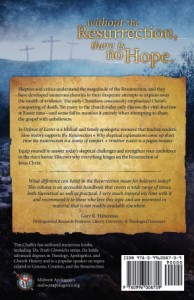
Here's a look at the back cover of In Defense of Easter.

Here’s a look at the back cover of In Defense of Easter.

I have been speaking on the Resurrection of Jesus for about a decade, and it has always been my favorite talk to give. I’m excited that I’ve been invited to present it at the upcoming Answers in Genesis Mega Conference in Costa Mesa, CA, in July. I’ve been blessed with so many opportunities to share this glorious truth, but I’ve also noticed a disturbing trend among many believers. For whatever reason, this central doctrine is often overlooked and neglected by many Christians, including pastors and other leaders.

All of our hope is in the death-conquering Savior, so why does it seem like we only talk about it once a year at Easter time? How is it that so many modern Christians fail to mention this critical event in their preaching, and sadly, even when attempting to share the gospel? In Defense of Easter puts the Resurrection back where it belongs: along with Christ’s Crucifixion, right at the front and center of the Christian faith.

Dr. Gary Habermas, widely acknowledged as the leading scholar on the Resurrection today, wrote the following words about In Defense of Easter:

Challenges to Jesus’ Resurrection are frequently made on the popular level, and answers must be forthcoming. Tim Chaffey’s volume responds to many of these contemporary questions, as well as moving beyond arguments and evidences to the application of Resurrection truth. What difference can belief in the Resurrection mean for believers today? This volume is an accessible handbook that covers a wide range of issues, both theoretical as well as practical. I very much enjoyed my time with it and recommend it to those who love this topic and are interested in material that is not readily available elsewhere.

Order your copy of In Defense of Easter today from my online store, and get free shipping until Easter (April 20).
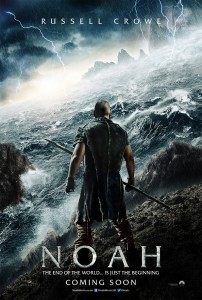
Paramount’s Noah—Artistic License Run Amok

Does this Noah line up with the biblical Noah?

Does this Noah line up with the biblical Noah?

There has been considerable buzz about the new Noah movie set to hit theaters this weekend. Some Christian ministries, such as the one I work for (Answers in Genesis), have warned people about many of the unbiblical elements in the movie. Other Christian leaders have encouraged people to go see it since they hope it will spark discussion about the account of Noah and get people interested in reading the Bible.

Oftentimes, the people who have warned of the dangers of this film are ridiculed for overreacting—“It’s just a movie. They are using artistic license. It’s for entertainment, so lighten up.” These are just some of the types of statements we hear, but they generally come back to the idea of artistic license, so I want to focus on that in this post.

Artistic license is a given. It must be used when doing a historical movie, book, play, etc., particularly when we have few details about the characters. In this case, we don’t know what Noah looked like, how he dressed, what he sounded like, where he lived, or what his occupation was prior to the Flood. These sorts of things are filled in by the writer or director through the use of artistic license.

In my position as Content Manager at the Ark Encounter, I am well aware that we will frequently take artistic license when depicting Noah and his family on the Ark. In fact, the Ark itself requires us to take artistic license. We don’t know exactly what it looked like, how the animals and enclosures were arranged, or precisely how Noah’s family cared for all the animals.

Since we are free to use artistic license in these matters, how can someone be critical of the new Noah movie? Isn’t that hypocritical? No, it isn’t, and here’s why. When we take artistic license, we do our very best to make sure we are staying consistent with the biblical account. Yes, there are many unknowns, but we will not knowingly contradict any clear teachings in Scripture.

On the other hand, based on what I’ve read and heard (including an hour-long chat today with someone who recently watched it at Paramount), Darren Aronofsky’s Noah film is at odds with Scripture at many points. The person of Noah is portrayed as a violent man who cares little about humanity. He kills several people early in the film, and he even gets to the point where he wants to murder his own family members but isn’t able to go through with it. Noah appears conflicted throughout the film. Should he kill his own granddaughters to prevent humanity from surviving after the Flood? Has he really done what God wanted him to do?

Compare this to what we read in Scripture about Noah. He “was a just man, perfect in his generations. Noah walked with God” (Genesis 6:9). He did everything God commanded him to do (Genesis 6:22). He is called a righteous man by Ezekiel who put him in the same context as Job and Daniel (Ezekiel 14:14, 20). He is called a preacher of righteousness (2 Peter 2:5). And he is found in the “Faith Hall of Fame” of Hebrews 11, where we read, “By faith Noah, being divinely warned of things not yet seen, moved with godly fear, prepared an ark for the saving of his household, by which he condemned the world and became heir of the righteousness which is according to faith” (Hebrews 11:7). No, he wasn’t perfect. The Bible includes an account after the Flood where Noah became drunk (Genesis 9:21).

Tim's latest book is a practical apologetic on the Resurrection of Jesus. See www.midwestapologetics.org/shop for more details.

Tim’s latest book is a practical apologetic on the Resurrection of Jesus. See www.midwestapologetics.org/shop for more details.

There is plenty of room for artistic license here. Go ahead and make Noah a strong man who can wield a weapon. Show him struggle emotionally with the fact that the rest of humanity is going to be wiped out. Have him care deeply about the environment. The Bible doesn’t rule these things out. But it repeatedly stresses that he was a righteous man who walked with God, so don’t turn him into a man who wants to kill his own family members and one who seems to rarely acknowledge God. Don’t make him someone who can’t stand other people. Righteous men have a deep concern for people and want to see others come to trust in God.

The director, Darren Aronofsky, and the screen writer, Ari Handel, have repeatedly stressed how much they studied the Bible to make sure they got it right. This is difficult to believe, since they so often get it wrong, and not just with Noah’s character either. I’m sure they studied the Bible, but it seems that they view its Flood account as just another legend, like those found in so many other cultures. Rather than viewing the Bible as God’s inspired Word, they often ignored what it states.

Let’s employ the concept of artistic license in a different situation. Imagine making a film about Hitler where he is still the catalyst for World War II, but instead of murdering six million Jews and trying to wipe them off the face the earth, he loves the Jews and protects them. How would that go over in our world? Could that twist just be written off as artistic license? Or how about making a movie about Charles Darwin where he still takes the voyage on the Beagle, but when he returns, he writes books all about creation, ridicules evolutionary ideas, and tells everyone that what he saw on his travels confirmed the biblical account? Could we pass that off as artistic license? Of course not. In both cases, what is being taught about the individuals is the opposite of the truth.

This is one of the major problems with the Noah film and other films that knowingly portray biblical characters incorrectly. The people who make these pictures have very little respect for Scripture or the people in it, and they end up making a mockery of the Bible. They give the wrong impression to viewers about God’s Word and in doing so, they make themselves into false teachers.

Much more could be written and will be. I plan to see the movie in a couple of days, and if I have misrepresented the film in this post, I will gladly retract the wrong statements and apologize. Although based on the reviews I’ve seen and heard, I have a feeling that I have vastly understated the problems with this film. If that is the case, then I may need to write a “Part Two” to this post.

[Added on 3/30/2014: I have now seen this film and it is far worse than I imagined. In addition to countless errors, the film turns God and Noah into cruel and wicked beings while making the fallen angels the real heroes of the movie who end up getting saved at the end. I was continually reminded of Isaiah 5:20, “Woe to those who call evil good, and good evil; who put darkness for light, and light for darkness; who put bitter for sweet, and sweet for bitter!” I have written a full review of the film, which has been posted on the Answers in Genesis website. I plan to write more in the very near future.]